THE POSSIBLE SHOP
Cowboy Action
Cap & Ball
Muzzleloaders
Muzzleloader
Shooting Supplies
Gun Care
Personal Gear
Camp Gear
Archery
Books
Patterns
Reloading
Farm & Ranch
Mercantile
Home
Sign For Our
Monthly Drawing
Testimonials
Customer Corner
Possible Shop
News Letter

MENU

CAP & BALL
PISTOLS

Uberti Cap & Ball Pistols
 
Pietta Cap & Ball
Pistols
 
Pocket Derringer
 
Cap & Ball Kits

CAP & BALL
ACCESSORIES

Powder Flasks &
Flask Spouts
 
Spare Cylinders For
Cap & Ball Revolvers
 
Cap & Ball Nipples
 
Cap & Ball Supplies
 
Cap & Ball
Shooting Kit
 
Snap Caps
 
Tools & Accessories
 
Pistol Display Cases
 

SHARPS RIFLES & ACCESSORIES

1859 - 1863
Sharps Rifles
 
1859-63 Sharps
Accessories
 
Cross Sticks

VINTAGE RIFLE SCOPES

Vintage Rifle Scopes

COWBOY GEAR

Rifle & Pistol Covers
 
El Paso
Cowboy Holsters
 
Holsters & Belts By:
Oklahoma Leather
 
El Paso Cowboy Belts
 
El Paso Holster Rigs
 
Cowboy Bedrolls

SADDLE BAGS

Saddle Bags

COWBOY BOOKS

Cowboy History
 
Cowboy Cooking

STAGECOACH

Stagecoach For Hire

COWBOY ACTON

THE COWBOY

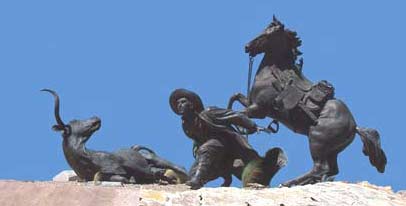
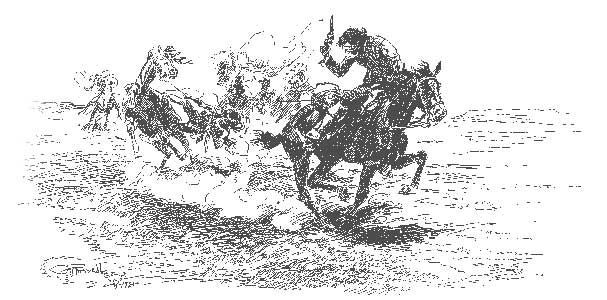
The historic American cowboy of the late 19th century arose from the vaquero traditions of northern Mexico. The cowboy's distinctive working gear, captured the publics image. The crowned cowboy hat, high-heeled boots, leather chaps, pistol, lariat, and spurs were functional and necessary. As the cowboy adapted to the  differences in terrain, climate, cattle-handling techniques and time, the cowboy's equipment and techniques also adapted, though many classic  traditions are still preserved today. The word Cowboy took on many different names, in 1852 "Cowhand" might have been used, or "cowpoke" in 1881, other names such as Cowpuncher. Wrangler or Buckaroo were also used. "Cowboy" is a term common throughout the west and particularly in the Great Plains and Rocky Mountains, "Buckaroo" is used primarily in the Great Basin and California, and "cowpuncher" mostly in Texas and surrounding states.


CAP & BALL REVOLVERS

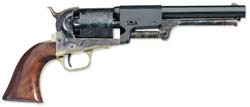
Samuel Colt patented the first commercial firearm employing a revolving cylinder with multiple chambers aligned with a single stationary barrel in February 1836. The ”Paterson” a 5 shot revolver in .28 caliber, was the first, with a .36 caliber model following a year later.  Beginning in 1847 Samuel Colt brought the percussion pistol (Cap & Ball) into the fullness of its development. Colt produced a wide variety of black powder Cap & Ball revolvers between 1847 and 1873.  They included the 1847 Walker, the First, Second, and Third Model Dragoons, the 1862 Pocket Police, the 1848 Baby Dragoon, the 1865 Pocket Navy, the 1860 Army, and the 1851 and 1861 Navy’s .
 

SHARPS RIFLES

The Sharps Manufacturing Company was organized by Samuel Robbins and Richard S. Lawrence on October 9, 1851. The Sharps Rifle was widely accepted by the military at the onset of the American Civil War.  The Military used the Sharps Berdan, standard version, The Sharps Berdan Special Version and a Carbine version. The carbine version, was the most widely-used by the Union Army. It was so successful that it was copied and manufactured by the Confederate Government to arm its mounted troops. Sharps also made a Sporting  Rifle.  After the American Civil War, converted Army surplus guns were made into custom rifles, and the Sharps factory produced Models 1869 and 1874 rifles in large numbers for the commercial buffalo hunters and frontiersmen.


CATTLE DRIVES

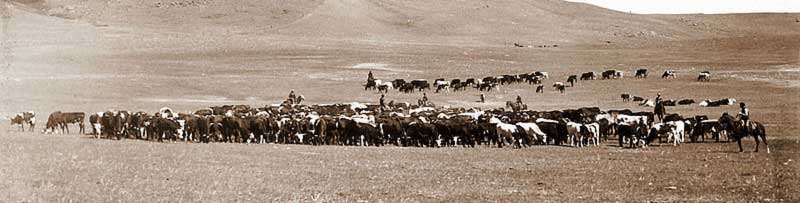
Driving Cattle to market from Texas became a regular occupation in 1836 before Texas broke away from Mexico. The first trails delivered cattle to New Orleans then in the 1840s it expanded to Missouri. The Westward expansion during the 1850s caused a demand for oxen. It has been recorded that freight companies utilized some 40,000 oxen to pull the freight wagons to points west.
At the close of the Civil War in 1865, Texas had probably five million cattle—but no market. A few cattleman tried to find markets North without a much financial success. However, in 1865 Philip Danforth Armour opened a meat packing plant in Chicago known as Armour and Company.
The first large-scale effort to drive cattle from Texas to Sedalia, Missouri, the nearest railhead, for shipment to the new packing plant in Chicago occurred in 1866. The drive failed to reach the rail head due to farmers in Eastern Kansas afraid that transient animals would trample crops and transmit cattle fever to local cattle, formed groups that threatened to beat or shoot cattlemen found on their lands.
By the next year, a cattle shipping facility was built west of farm country around the railhead at Abilene, Kansas, and became a center of cattle shipping, loading over 36,000 head of cattle in its first year. The route from Texas to Abilene became known as the Chisholm Trail, named for Jesse Chisholm who marked out the route. Later, other trails forked off to different railheads, including those at Dodge City and Wichita, Kansas. By 1877, the largest of the cattle-shipping boom towns, Dodge City, Kansas, shipped out 500,000 head of cattle.
The typical drive comprised 1,500-2,500 head of cattle. The typical outfit consisted of a boss, from ten to fifteen Cowboys, each of whom had a string of from five to ten horses; a horse wrangler who handled the horses; and a Cook, who drove the Chuck Wagon. The wagon carried the Bedrolls; tents were considered excess luxury. Ten or twelve miles was considered a good day's drive, as the cattle had to thrive on the route. The Cowboys menu consisted of bread, meat, beans with bacon, and coffee. Wages were about $40 a month, paid when the herd was sold.


Home
Contact
Shipping
Links
Back To Shopping Cart